
“Blessed are those who have not seen and yet believe.” One of my favorite stories in the Bible is that of Thomas doubting not only the accounts of his fellow apostles but the very resurrection of our Lord. He refused to believe until he saw for himself not just the risen Christ but also saw the holes in His hands, in His feet, and got to place his own hand in Jesus’ side. Thomas wanted to see not just proof of the resurrection but the scars of Christ’s crucifixion and death. What a paradigm when Jesus said after showing Thomas His hands, His feet, and letting him place his hand in the hole in His side told him, “Blessed are those who have not seen me and yet believe.”
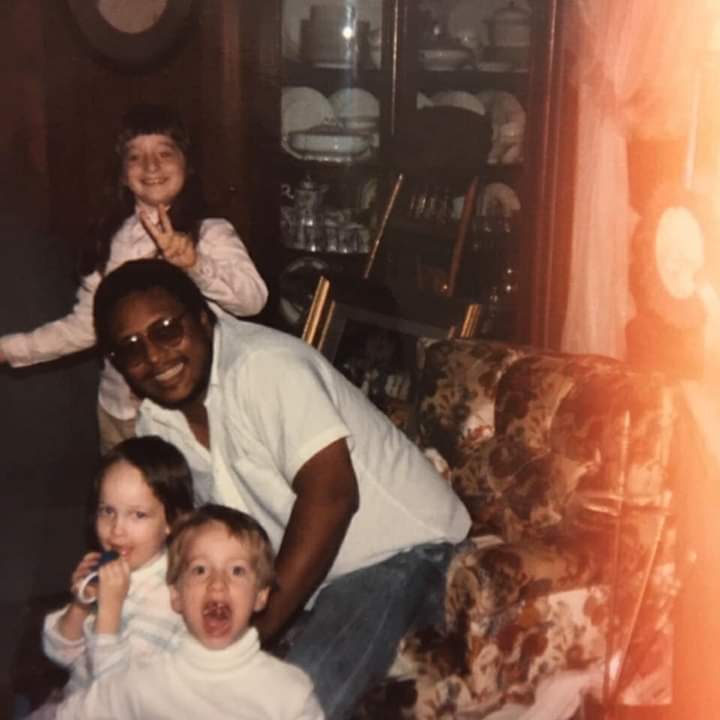
I am white, but my uncle was black. His four daughters, my cousins, are biracial. Even though we did not share the same skin color or the same blood, my late uncle never made me feel like I was not a member of his family. I thought I was helping when I told those of my own race that I did not see race or color. I was not only blind; I was blinding others. Do we ourselves have to witness the suffering of our fellow man in order to listen and believe their calls for equality and justice?
Ironically, my perspective on race did not really begin with my uncle or my cousins. I did not realize how blind I really was until an exchange in college. A woman of color stood up in the back of a classroom to explain her experience with having been racially profiled. She told the story of being pulled over on the Garden State Parkway while driving her father’s silver Mercedes. She said that she was pulled over and the police officer asked for her license and registration. After returning and handing back her license and registration, the officer told her, “Go home.” She asked why he had pulled her over; his response was, “Go Home.” “But sir, I do not know why you pulled me over”; he restated, “Just Go Home!” Indifferent to our constitutional guarantees of due process, she was never informed of the reason for her temporary detainment.
Less than 10 years ago, I told that same story amongst friends here in West Virginia and another woman of color with us said nearly the exact same thing happened to her driving back from a movie in her Lincoln Navigator in Parkersburg. I since learned that blacks call it, “driving while black.” The old television sitcom, “The Fresh Prince of Bel Air,” had an episode addressing it, and the current sitcom, “Brooklyn Nine-Nine” addressed it just a few years ago. Is racial bias so bad that some members of our race (white) think people of color driving expensive vehicles should be checked just to be sure they have not stolen that vehicle? These examples are just the tip of the iceberg. Our brothers and sisters of color have been crying out for justice for too long. Their cries have fallen on our deaf white ears for far too long, and what else can they do to not only get our undivided attention but our unfailing leadership, action, and support for equalizing change?
My uncle Nathan was a devoted husband, father, fan of the WVU Mountaineers and the Pittsburgh Steelers. He was also a veteran of the United States Air Force. I did not know it at as a child, but my uncle was afraid to take not only his white nieces and nephews out in public but even his very own lighter-skinned daughters. He was not afraid of stares, glares, sneers, or even comments people might make. He was used to that. He was always afraid a ‘Karen’ might question and call the authorities on him. He was afraid that he would have to prove in public that he was in fact the father or uncle of the kids in his care. He worked, raised his family, paid his taxes, and served our country; but he was afraid to take his own kids out in public. Does that sound like “liberty and justice for all”?
My uncle died of cancer before Colin Kaepernick kneeled during the national anthem. He died before Trayvon Martin, George Floyd, and Breonna Taylor. He died before these renewed debates about the Confederate flag and Confederate statues. I wish he was around for many obvious reasons, but I would really like to have heard about his thoughts from a black family man who had served his country. I would be very interested to hear his opinion of a free country where some people want all to stand for the flag while its creed and pledge are still not remotely true for others and too many. I wonder what he would say to know that the United States in the year 2020 can tolerate imperfection of our governments, our leaders, our pledge, our declaration, our creed, our law enforcement, our teachers, and so many others; but it expects every person of color to act in step with the perfect memories of Dr. Martin Luther King, Jr., and Jackie Robinson.
Why is it so much easier to tell a black man to stand for Old Glory than it is to tell a member of our own white race to stop judging others by the color of their skin? Why can it be easier for some to justify waving the Confederate flag or memorializing Confederate generals than it is to see our black brother and sisters as our brother and sisters? Why does it seem easier and far more likely for a white to call out looting and vandalizing than it is to call out both blatant and passive racism? Why do we whites think that a white racist cannot be convinced and converted to the cause for anti-racism, but we can easily point out the sins of a man murdered in the street?
I wish when I was in school and heard others use that N word that I had spoken up. I do not know why I did not, but I should have. If we want to end the protests, the riots, the social media storms, and racism itself, we must treat not just the symptoms but most importantly, the disease itself. We must be willing to call out racism whenever and wherever we see it or hear it. We can no longer simply overlook that one of our white friends or white family members is racist, and there is nothing we can do to change it. We must be willing to call it out. Because if we ignore it or avoid it, we are all avoiding and ignoring the issue of race, and we give racism another breath of life into the next generation. I know it is uncomfortable, but if someone saying something makes you uncomfortable, why not attempt to make them feel uncomfortable, too.
I am white and my uncle was black. My job as a Christian demands me not to tell the person being struck to turn their other cheek. Instead, my Christianity demands that I pray, listen, speak up, and act to stop not just the effects of racism (e.g. riots, looting, vandalism, and violence) but more importantly its root causes of police brutality, injustice, inequality, and racism itself. When shall we expect more of ourselves than we do the least amongst us? When shall we ensure that our actions and our deeds reflect our words? I am white, and I pray one day that does not matter. While today is not that day, it is coming sooner than later. Let that be our task, our mission, and our sacred promise to one another. As Robert F. Kennedy so eloquently stated, “Some see the world as it is and ask why; I see the world as it can be and ask why not.”
 The Conservative-Liberal Independent