Where Have All The Teachers Gone?

While teaching the difference between liberals and conservatives and the intricacies of federalism and separation of powers as a former public school teacher in West Virginia, I also had numerous students over the years come to me about their suicidal thoughts, homeless living situations, career dreams and ambitions different than their parents, and so many others left unheard by a system that cares more about improving test scores or graduation rates than helping the development of aspiring young people. I left my classroom to advocate for improvements to public schools for students, their parents, and their teachers. After recently earning a master’s degree in policy management from Georgetown University, I contemplated returning to my classroom full-time and continuing to advocate part-time. Yet, even with two master’s degrees and sixteen years of experience, if I returned to my old classroom, I would currently earn less than $55,000. 

According to a recent report from the Annenberg Institute at Brown University, there are now 36,000 teacher vacancies in K-12 schools nationwide and another 163,000 teachers who are not certified in the subjects they are currently teaching. Based on these findings, students in more than 200,000 classrooms nationwide are receiving a substandard education. In the most capitalistic economy in the world, why is the market not dictating a bidding war for the growing shortage of the best and most qualified professional educators? 

Unsurprising to teachers nationwide, the National Assessment of Educational Progress (NAEP) scores recently showed students overall lost significant ground in learning for the first time in decades as well as more devastating learning losses among students of color and those from low-income households. Of the many challenges endured and lessons learned from COVID-19, it has been proven beyond any reasonable doubt that the large majority of students cannot reach their fullest potential without consistent access to quality educators in the classroom. Yet, how do we stop the exodus of teachers from their classrooms?  Learning loss cannot be reversed without retaining those educators most experienced, tested, and most adept to today’s new challenges. As the nationwide teacher shortage worsens, efforts must not only recruit new teachers; efforts must be prioritized to retain and, if possible, bring back those that have already left the profession.

The best way to recruit new prospects to any profession must include taking care of those who already serve, and learning loss can never be reversed as long as teacher loss continues. If we wish to recruit, maintain, and raise a gold standard of public education and public educators in these United States, then we must restart by rewarding the workforce most entrusted with the invaluable service of educating our next generation of doctors, engineers, entrepreneurs, and plumbers. Just like every other profession in our capitalistic economy, we first recruit and retain by setting a salary dictated by the market, especially in a time of a massive, nationwide shortage. 

Teachers are neither ignorant nor oblivious to the struggles of our students or their parents.  There is not a social ill, economic challenge, or governmental failure that does not show up to our classrooms on the faces of our students. When parents are stressed, our students are stressed. When parents lose their jobs, teachers learn from the changes in their students’ behaviors. When tragedy strikes a family, teachers learn through the tears in their student’s eyes. Educators not only teach; educators console, coach, counsel, motivate, mentor, advocate, and root for your sons and daughters. Teachers too often must also care for and become much more for those countless students whose parents are absent in more ways than one. As more teachers consider and decide to leave their classrooms every day, who will convince them to stay, come back, and continue the invaluable work of cultivating our nation’s most valuable natural resource?

Right now, Congress is considering two separate bills attempting to invest in our students and their teachers by setting a nationwide minimum teacher salary at $60,000 per year, the American Teacher Act (H.R. 882) in the House and the Pay Teachers Act (S. 766) in the Senate. Contact your members of Congress and encourage them to support these legislations. Our economy, our democracy, our families, and our children all depend on it.

  —–

C. Bryan Daugherty, senior thesis teacher at Cesar Chavez Public Charter School in Washington, D.C., and advocate working to improve public education nationwide along with The Teacher Salary Project, an organization dedicated to addressing the urgent need for a complete cultural shift in the way our society values and supports teachers.
Silver Bullets and Public Education–A Teacher’s Perspective

What is one idea you can offer to significantly improve public education?  This is a question many Americans easily ask.  But for teachers, this question stumps, frustrates, and angers.  Teachers are not stumped because they lack an answer; teachers are frustrated because they can easily name dozens.  In a profession already overburdened, underappreciated, and short-changed, teachers are disheartened that even their hypothetical magic lamp comes with only one wish instead of three.  Regardless, we need to stop searching for that one silver bullet unless it simultaneously saves the profession of educators and reverses the learning loss that has occurred over the last two and half years.

Desperate times call for desperate measures.  There has never been a more desperate need for a silver bullet to drastically improve public education, release the growing pressure on teachers, and improve morale so more do not head for the exit.  Every state and school district currently experiencing a teacher shortage should quickly implement a four-day school week.  Keep in mind, teachers would still be required to work five days a week, but students would only attend four days a week.  In addition, at least half of those non-instructional days must be conserved for teachers so that they will have time alone to work on lesson planning, grades, parent contacts, and the other infinite tasks that must be completed but cannot when students are present.  The remaining half of non-instructional days can be utilized for small group instruction and tutoring for students falling behind, teacher collaboration, and rarely, only the best professional development opportunities.

More than anything, the challenges during Covid-19 have forever proven that students cannot succeed without quality educators in the classroom.  Learning loss can never be reversed if teacher loss continues.  Yet, how do we stop the exodus of teachers from their classrooms?  Learning loss occurred due to unpredictable and inconsistent access to quality educators and cannot be reversed without retaining those most experienced, tested, and most adept to today’s new challenges.  As the nationwide teacher shortage worsens, efforts must not only recruit new teachers; efforts must be prioritized to retain and if possible, bring back those that have already left the profession.  In addition to drastically increased salaries, what other limited commodity must be allotted, reappropriated, and reinvested in teachers before more burn out, leave, and never return?

Next to pay, time could very well be the most important aspect of the teaching profession which is too often overlooked and rarely considered.  Teachers need time.  Teachers need time to plan before each lesson.  Teachers need time to reflect after each lesson.  Teachers need time to prepare each assessment.  Teachers need time to analyze and evaluate after each assessment, not to mention grade, input grades, and adapt future lessons based on the outcomes of each assessment.  Teachers need time to address individual student challenges and concerns as well as contact parents and collaborate with co-teachers, counselors, and administrators.  Teachers also need time to learn about new material, new strategies, and new pedagogy.  Plus, the more innovative the lesson or unit, the more time teachers need to prepare, reflect, and adapt.  Despite all the advancements in technology and civilization, there still remains only 24 hours in a day.  Collective expectations and responsibilities placed on teachers must come back to reality or otherwise we should be less surprised when so many teachers burn out and leave the profession for good.

According to President Josiah Bartlett of The West Wing, “Education is the silver bullet, for crime, unemployment, [and] poverty.”  Yet, far too often in American politics, public schools have been overridden, overregulated, and overburdened with countless reforms implementing one silver bullet after another promising to fix all ills facing public education and society at large.  Instead, each silver bullet has piled on additional responsibilities with little or no noticeable improvement except giving teachers more reason to leave the profession.  In order to reverse the growing shortage, time in the form of a four-day instructional week must be implemented to ease the burden placed solely on teachers, greatly improve their morale, and give them the time they need to better serve their students.

Death Tolls and Test Scores–A Teacher’s Perspective

Unsurprising to teachers nationwide, recently released NAEP scores (National Assessment of Educational Progress) show students nationwide have lost significant ground in learning for the first time in decades as well as more devastating learning losses among students of color and those from low-income households.  More importantly, Covid-19 also claimed the lives of more than one million Americans.  Even in a profession overrun and overburdened by an obsession with test scores, learning-loss concerns highlight not only justified and long overdue concerns for students of color and low-income households, the conversation also reveals yet again that some commentators and experts might well be more concerned with test scores than human lives.  Perhaps when discussing learning loss and future implications, we should study the whole picture instead of losing sight of the trees amongst the forest.

If numbers are so important, why do we know so little about those lost to the ravages of a highly contagious and deadly respiratory virus?  Who were those Americans?  How many were parents, grandparents, and guardians of our students?  How many were actually below the age of 18?  Were any specific professions, industries, or workforces affected more than others?  How many other lives have been forever altered by their passing or whose own health has been forever altered?  In a country overtaken with a profit-margin obsession with data, where are those numbers and could we not learn anything insightful for the benefit of our present and future?

As far as test scores and learning loss, perhaps we should consider widening our focus.  Studying numbers without context is like a team trying to improve after a loss by only studying the final score.  The devastating yet not unrecoverable learning loss over the last two and a half years should finally prove beyond dispute that online learning does not hold a candle to the impact and influence of a quality teacher in the classroom.  More than any narrative regarding learning loss after Covid-19, the need for students to continually, repeatedly, and consistently have access to quality educators should now be proven far beyond any reasonable doubt.  While a nationwide teacher shortage continues to worsen due to Covid-19 and divisive, pot-stirring politicians, we must now prioritize retaining and recruiting teachers if we hope to reverse learning-loss and greatly transform education for all students.

Thus far the rhetoric surrounding the teacher shortage and proposed solutions are dominated by ideas to recruit new rather than retain the experienced.  It does not take a rocket scientist to figure out that the best way to recruit new prospects to any profession must include taking care of those who already serve.

If we wish to develop, transform, and raise a gold standard of public education and simultaneously recruit a higher standard of public educators in these United States, then we must first begin by reexamining and resetting the expectations and responsibilities already piled on educators.  Administrators, parents, policymakers, and elected leaders should remember that there remains only 24 hours in a day.  If our country and its leaders can so easily expect and demand so much of a profession without demonstrating any practical comprehension of its harsh realities, perhaps those same leaders might learn from those of us who learn about the struggles, challenges, and failures of our country in the hallways of our schools, in our classrooms, and most significantly, on the faces of our students.  If legal reforms should be entrusted to lawyers, healthcare reforms to doctors and nurses, then we must start legitimately listening to the concerns and challenges of teachers from teachers and empowering teachers to initiate the changes that will bring about the practical, meaningful, and relevant transformation needed to improve our schools to help all our students succeed far beyond our classrooms.

West Virginia: Vote No on Amendment 4!

Why would the founders of West Virginia establish a state board of education so vastly different from other states?  In pre-Civil War Virginia, the eastern establishment believed education to be a privilege rather than a right.  While most free persons were forced to homeschool, the wealthy and larger plantation owners could afford to send their children off to boarding schools and universities or hire tutors to teach their children at home on the plantation.  Virginia had not yet established public schools.  Perhaps, that is why the founders of West Virginia established the State Board of Education with the sole power and purpose to oversee and ensure “a thorough and efficient system of free schools” (Article XII, WV Constitution).  To see republican members of the West Virginia Legislature, move to amend the state constitution, undermine the intentions of the founders, and further undermine its historically established free public schools is quite disappointing.

I thought the Republican Party was the party of tradition, conservatism, and preserving the intention of the founders.  If Amendment 4 is passed by voters on November 8th, it will make the State Board of Education virtually powerless and lead to further questions regarding the need for its very existence.  Handing such power over to the WV Legislature works in contrast to the legitimate concerns of parents.  According to Alia Wong of USA Today (October 27, 2022), “a survey of roughly 1,500 parents and guardians published last December, notably, found that the biggest education concern for more than two in three respondents was “politicians who are not educators making decisions about curriculum.””

For those so concerned about partisan issues being implemented into school curriculum, why vote to hand such power over to the WV State Legislature?  At some point, majorities in the WV Legislature will change hands.  The control sought by those in power today will someday be handed over to those they oppose and disagree.  Should the policies and curriculum of our schools change based on the victors of each election?  If so, how does that remove politics from our children’s education?

Further, conservative lawmakers complain that the WV State Board of Education is not responsive enough to the concerns of parents and voters.  All nine members of the State Board of Education are appointed by the Governor as well as confirmed by the WV State Senate.  Are republican legislators unhappy with the members appointed by Governor Justice and confirmed by their fellow republicans in the WV State Senate? 

Lastly, republican legislators have repeatedly argued their charter schools and Hope Scholarships are meant not to harm but force public schools to adapt and compete.  If Amendment 4 passes, it will make it harder, not easier, for the WV State Board of Education to reduce and eliminate burdensome regulations needed to unchain the potential of educators and most importantly, their students.  Are they attempting to hinder the very competition they promote?

Some responsibilities of government should rise above the chaotic and shifting winds of political postering.  Public schools should be insulated away from politicians who are far more likely to exasperate complex challenges than to provide practical and effective solutions.  After two years of countless interruptions, our students, now more than ever, need consistency, continuity, and stability at school.  Empowering the West Virginia Legislature to oversee every rule change and regulation considered by the State Board of Education is a step too far. 

Vote to preserve the intentions of the founders of West Virginia!  Vote to preserve public education for the parents who continue to choose public schools over others.  Most importantly for the kids in our public schools, please vote NO on Amendment 4!

ONLY TWO TO TANGO BUT A NATION RAISES A CHILD

As Benjamin Franklin was leaving Independence Hall after the conclusion of the Constitutional Convention in 1787, it was a woman who asked, “Doctor, what have we got?  A republic or a monarchy?”  Franklin replied, “A republic, if you can keep it.”  Justice Alito, in Dobbs v. Jackson Women’s Health Organization, wrote that rights not specifically mentioned in the Constitution can only exist if they are “deeply rooted in this Nation’s history and tradition.”  He added that defending women’s reproductive rights via the 14th Amendment is unjustified since at the time of its adoption (1866) that a majority of states had outlawed abortions.  As the story of Benjamin Franklin and the long overdue adoption of the 19th Amendment (1920) clearly illustrate, historically men write the laws and women must follow them.

Does the Dobbs decision, to return the issue of abortion back to each state’s elected representatives, infer that all persons with a uterus are hereby and henceforth property of the state wherein they reside and subject to the will of the majority of its voters?  Justice Alito might have written that, but that would require identifying a male reproductive organ as the legal equivalent to that of a uterus.  Perhaps, Justice Alito and his fellow constitutional purists might want to contemplate their role in interpreting the biological and legal equality between the sexes which the founders never had to consider or debate because until the last 100 years, women were never allowed in any room to decide anything that happened.

Overcoming the filibuster requires invoking cloture with 60 votes in the United States Senate, but overturning over 50 years of legal precedent takes only 5 justices.  The Second Amendment historically guarantees every single American a modern-day AR-15 until violent behavior proves otherwise.  Meanwhile, not a single woman in these United States can be trusted to make medical decisions within the nine months of pregnancy.  What an ironic American political oxymoron that is.  By the way, Dobbs overturning Roe (and Casey v. Planned Parenthood) is not the same as Brown v. Board of Education overturning Plessy v. FergusonBrown was decided 9-0; Dobbs needed only 6-3.  Let us all hope and pray that Justice Alito never feels that Brown failed to unite the country and resolve racism in the United States or perhaps he might write to overturn it as well. 

Is there only one way to be pro-life?  I too have learned, agree, and share the Catholic Church’s teachings to protect the dignity of each and every life from conception to natural death.  But I cannot support any law that nationalizes every woman and their uterus as property of the state, assumes every person with a uterus to be promiscuous and untrustworthy to make decisions on their own, and exclusively punishes female promiscuity with a lifetime of penniless hunger and homelessness for them and their offspring.

Let us also consider how the nationalization of every uterus as property can be misconstrued, abused, and corrupted.  What might go wrong when the same crowds who continually fear overcrowding and overpopulation successfully influence lawmakers?  Could the United States enact China’s one-child policy?  Could the United States, in order to ensure better generations of recruits for the armed services, implement the same infant inspection process of that of ancient Sparta?  Could the United States ever reinstall the practice of eugenics?  Perhaps, ownership and control of reproduction should be left to be interpreted as a private right and responsibility.

The decision has been rendered and published; what do we do now?  We can interrogate those running for office on pro-life platforms in order to distinguish those that are really pro-birth rather than pro-life.  Every pro-life candidate should be asked if they are prepared to propose and enact legislation to tax and spend more for government housing, food stamps, childcare, public education, and Medicaid.  Are they prepared to enact Dead-Beat-Dad bills to ensure every biological father pays his share to ensure the best childhood for every child?  Will the states enacting the most restrictive abortion laws provide the most government assistance programs to single mothers fearful of a lifetime of poverty for her and her offspring?  Are those states also prepared to financially improve their foster care systems and make adoption far more affordable?  If one only cares about the moment a newborn first breathes and the nine months prior without consideration for the eighteen years after, they obviously do not truthfully care as much about lives and children as they preach.  If they do not intend to financially provide for those unable to provide for themselves and their children, then they in fact propose a pro-birth agenda that continues to use poverty as punishment for fatherless children and female promiscuity while male promiscuity continues unhindered.

I will never forget 9/11

On September 11th, 2001, I was in my 9am Physics Lab as a sophomore at WV Wesleyan when a classmate said aloud that a plane had hit the World Trade Center in New York City. We all laughed it off thinking it was some idiot flying a small private plane. We finished our experiments early that morning, and I was back in my dorm room while typing up my lab report that the anchor of ESPN’s SportsCenter announced, “A second plane has hit the World Trade Center.” I remember pausing as I typed and asking myself, “What did he just say?” I then spun around in my chair, reached for my remote, and I began to flip through the channels. It was HLN where I stopped and began to watch the live broadcast of people running through the streets of New York City while the Twin Towers behind were engulfed in smoke.

Like so many, I will never forget that day. I will never forget trying to convince myself that I was in fact watching live television and not some movie. I will never forget the feelings of being alone in my dorm room by myself (no roommate that semester) as I could not look away from the screen as I too learned about the Pentagon, the crash of Flight 93 in nearby Pennsylvania, and watched each of the two towers collapse in front of my eyes. I will never forget showing up to my noon Bonner Scholars’ meeting only for it to be cancelled as classmates tried calling family members who worked in New York City. I will never forget going to my 1pm class for “Discrete Mathematics” and being dismissed after just five minutes. I will never forget staying up until I do not remember watching the news, praying for all those that had died in front of my eyes, all of those who tried and were trying to rescue any survivors, and praying survivors would be found.

On Wednesday, September 12th, I remember going to my 8am Calculus II class, and instead of doing calculus, we discussed the events of 9/11. Prior to 9/11, I had always had a passion for studying history and politics. It was after 9/11 and our discussions in Calculus II on September 12th that I began to think about those passions but also my interest in learning about why 19 hijackers would turn commercial airliners into weapons of war. I realized I wanted to talk about people, not numbers. I had gone to college to be a math teacher as I had always had high math scores, but I knew math was not my passion even though it was one my best talents. Despite the advice of several who tried to warn me that it would be easier to get a job as a math teacher than a social studies teacher, I would change my major within a week or two.

I became the teacher I once was partly due to the events of 9/11. I have studied and taught about American history from its birth to its present. I have studied and taught about the history of the world and particular regions of our world from early 20th Century to the present. I have studied, learned, discussed, and taught about various constitutional issues including the Patriot Act, racial profiling, U.S. v. Korematsu, so many other 9/11 related topics. I have studied and taught about the complexities of the religions of Islam, Judaism, Christianity, and others as well as the socio-economic issues related to the Middle East, the foreign policy of the United States, and its standing in the world especially how the United States is hindered if it acts, when it acts, where it acts, and when and where it does not.

While 9/11 changed me and so many others, I wish that we here in the United States could remember that on September 12th we were not liberals and conservatives or democrats and republicans; we were simply Americans. We still had to learn that Muslims should not be defined by the actions of an evil few just like Christians should be not be defined by those who preach white supremacy. We need to realize and remember our founding fathers knew what they were doing when they implemented religious freedom as the very first freedom in the 1st Amendment as well as in their early foreign agreements like that of the United States with its Treaty of Tripoli. The United States can still be and should be that shining city on a hill, but not as a gated community for those who look like us, pray like us, and think like us. The United States should always be a new home for those seeking freedom and opportunity but also a beacon of hope and justice that shines into the dark corners around the globe while simultaneously continues to struggle and strive to be a more perfect union. God Bless America and all of her people!

17 Angry Republicans

According to 17 Republican members of the West Virginia State Senate, the phrase, “Black Lives Matter,” is “hate speech.”  I find that intriguing.  While the Black Lives Matter movement has lasted longer than the Confederate States of America, I cannot help but ask those 17 Republicans if that also means the Confederate Battle flag is an expression of hate endorsing treason, disunion, and white supremacy.  What about a statue of a Confederate general on the capitol grounds of the only state born of the Civil War? 

Furthermore, how many of those angry Republicans spoke up and denounced the displays on GOP Day on March 1, 2019 deemed by many as anti-Muslim and Islamophobic?  How many of those 17 Republican senators spoke up to support “The Fairness Act” in order to ensure LGBTQ West Virginians are not discriminated against when applying for jobs or seeking housing?  I have yet to hear if any one of those 17 Republicans have spoken to Governor Justice about his unilateral decisions regarding the $1.24 billion appropriated by Congress to combat the pandemic.  Have they asked him why $1 billion sits in a bank account instead of being used to help countless West Virginians?  But a sticker with the letters, “BLM,” on football helmets is what awaken those 17 Republicans to write an angry letter to the presidents of West Virginia University and Marshall University?

Pope Paul VI once said, “If you want peace, work for justice.”  How many of those 17 Republicans have walked or offered to walk with students of color on either university campus?  How many have taken time to sit down, speak, and most importantly genuinely listen to the fears, concerns, and stories of West Virginians of color of every community?  Instead of getting all hot and bothered by three letters and a sticker or telling a black man to stand for the anthem, why not listen to the anger, frustrations, and stories of our brothers and sisters of color?  Is it somehow easier to feel the pain of damaged property than those falsely detained and wrongly restrained due to the color of their skin?  Why is it easier to tell a black man to shut up and play than to point out any imperfections of our electoral, judicial, and educational systems or acknowledge possible bias of an unknown number of not just law enforcement but teachers and others in positions of trust regardless of how many or how few? 

If only we had elected leaders who could sponsor, defend, and pass meaningful reforms to ensure that here in West Virginia equality and justice for all are ensured not assumed.  It is not enough for any one of us to say, “I am not racist!”  We must be willing to not only prove it but to learn of it and remedy it.  Could not every law enforcement officer, judge, prosecutor, and educator be required to take racial bias training to ensure conscious, subconscious, and if possible unconscious racial prejudice can be identified and treated? 

Is West Virginia only welcome to those that look like us, pray like us, love like us, and think like us?  We need to start electing leaders of either party to the West Virginia State Senate and every other elected office who have the courage to first listen legitimately then speak with both words and most especially with meaningful actions.  Rather than igniting, exploiting, and magnifying anger, we need leaders who exemplify compassion and empathy towards all who choose to call West Virginia home. 

C. Bryan Daugherty
No Party (Independent)
Harrisville, WV

I am white

“Blessed are those who have not seen and yet believe.”  One of my favorite stories in the Bible is that of Thomas doubting not only the accounts of his fellow apostles but the very resurrection of our Lord.  He refused to believe until he saw for himself not just the risen Christ but also saw the holes in His hands, in His feet, and got to place his own hand in Jesus’ side.  Thomas wanted to see not just proof of the resurrection but the scars of Christ’s crucifixion and death.  What a paradigm when Jesus said after showing Thomas His hands, His feet, and letting him place his hand in the hole in His side told him, “Blessed are those who have not seen me and yet believe.”

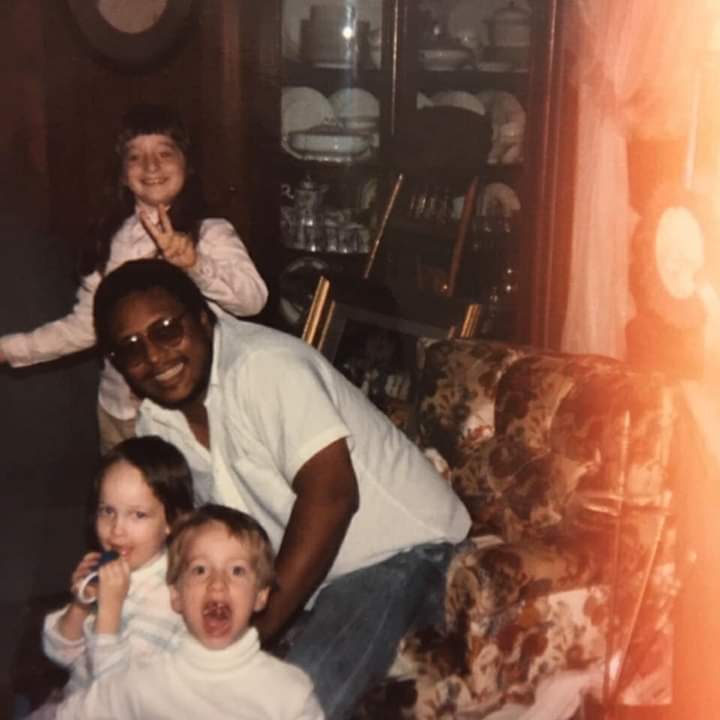
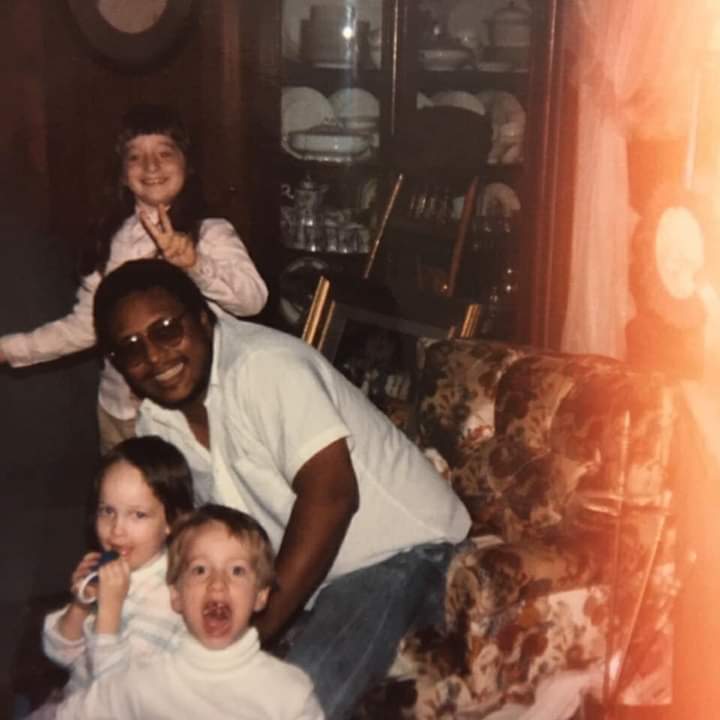
I am white, but my uncle was black.  His four daughters, my cousins, are biracial.  Even though we did not share the same skin color or the same blood, my late uncle never made me feel like I was not a member of his family.  I thought I was helping when I told those of my own race that I did not see race or color.  I was not only blind; I was blinding others.  Do we ourselves have to witness the suffering of our fellow man in order to listen and believe their calls for equality and justice? 

Ironically, my perspective on race did not really begin with my uncle or my cousins.  I did not realize how blind I really was until an exchange in college.  A woman of color stood up in the back of a classroom to explain her experience with having been racially profiled.  She told the story of being pulled over on the Garden State Parkway while driving her father’s silver Mercedes.  She said that she was pulled over and the police officer asked for her license and registration.  After returning and handing back her license and registration, the officer told her, “Go home.”  She asked why he had pulled her over; his response was, “Go Home.”  “But sir, I do not know why you pulled me over”; he restated, “Just Go Home!”  Indifferent to our constitutional guarantees of due process, she was never informed of the reason for her temporary detainment. 

Less than 10 years ago, I told that same story amongst friends here in West Virginia and another woman of color with us said nearly the exact same thing happened to her driving back from a movie in her Lincoln Navigator in Parkersburg.  I since learned that blacks call it, “driving while black.”  The old television sitcom, “The Fresh Prince of Bel Air,” had an episode addressing it, and the current sitcom, “Brooklyn Nine-Nine” addressed it just a few years ago.  Is racial bias so bad that some members of our race (white) think people of color driving expensive vehicles should be checked just to be sure they have not stolen that vehicle?  These examples are just the tip of the iceberg.  Our brothers and sisters of color have been crying out for justice for too long.  Their cries have fallen on our deaf white ears for far too long, and what else can they do to not only get our undivided attention but our unfailing leadership, action, and support for equalizing change?

My uncle Nathan was a devoted husband, father, fan of the WVU Mountaineers and the Pittsburgh Steelers.  He was also a veteran of the United States Air Force.  I did not know it at as a child, but my uncle was afraid to take not only his white nieces and nephews out in public but even his very own lighter-skinned daughters.  He was not afraid of stares, glares, sneers, or even comments people might make.  He was used to that.  He was always afraid a ‘Karen’ might question and call the authorities on him.  He was afraid that he would have to prove in public that he was in fact the father or uncle of the kids in his care.  He worked, raised his family, paid his taxes, and served our country; but he was afraid to take his own kids out in public.  Does that sound like “liberty and justice for all”?

My uncle died of cancer before Colin Kaepernick kneeled during the national anthem.  He died before Trayvon Martin, George Floyd, and Breonna Taylor.  He died before these renewed debates about the Confederate flag and Confederate statues.  I wish he was around for many obvious reasons, but I would really like to have heard about his thoughts from a black family man who had served his country.  I would be very interested to hear his opinion of a free country where some people want all to stand for the flag while its creed and pledge are still not remotely true for others and too many.  I wonder what he would say to know that the United States in the year 2020 can tolerate imperfection of our governments, our leaders, our pledge, our declaration, our creed, our law enforcement, our teachers, and so many others; but it expects every person of color to act in step with the perfect memories of Dr. Martin Luther King, Jr., and Jackie Robinson.

Why is it so much easier to tell a black man to stand for Old Glory than it is to tell a member of our own white race to stop judging others by the color of their skin?  Why can it be easier for some to justify waving the Confederate flag or memorializing Confederate generals than it is to see our black brother and sisters as our brother and sisters?  Why does it seem easier and far more likely for a white to call out looting and vandalizing than it is to call out both blatant and passive racism?  Why do we whites think that a white racist cannot be convinced and converted to the cause for anti-racism, but we can easily point out the sins of a man murdered in the street? 

I wish when I was in school and heard others use that N word that I had spoken up.  I do not know why I did not, but I should have.  If we want to end the protests, the riots, the social media storms, and racism itself, we must treat not just the symptoms but most importantly, the disease itself.  We must be willing to call out racism whenever and wherever we see it or hear it.  We can no longer simply overlook that one of our white friends or white family members is racist, and there is nothing we can do to change it.  We must be willing to call it out.  Because if we ignore it or avoid it, we are all avoiding and ignoring the issue of race, and we give racism another breath of life into the next generation.  I know it is uncomfortable, but if someone saying something makes you uncomfortable, why not attempt to make them feel uncomfortable, too.

I am white and my uncle was black.  My job as a Christian demands me not to tell the person being struck to turn their other cheek.  Instead, my Christianity demands that I pray, listen, speak up, and act to stop not just the effects of racism (e.g. riots, looting, vandalism, and violence) but more importantly its root causes of police brutality, injustice, inequality, and racism itself.  When shall we expect more of ourselves than we do the least amongst us?  When shall we ensure that our actions and our deeds reflect our words?  I am white, and I pray one day that does not matter.  While today is not that day, it is coming sooner than later.  Let that be our task, our mission, and our sacred promise to one another.  As Robert F. Kennedy so eloquently stated, “Some see the world as it is and ask why; I see the world as it can be and ask why not.” 

Dear Senator Carmichael–An Open Letter

As Dr. Laura Schlessinger once said, “We teach our kids how to behave by what we allow, what we stop, what we ignore, and what we reinforce.”

I am a born and raised West Virginian, and grew up a public school Catholic.  Like many in our schools, I went to class with Methodists, Baptists, Lutherans, Jehovah Witnesses, and atheists too.  We not only learned reading, writing, and arithmetic; we learned also that which cannot be tested or assessed.  We learned alongside one another, about one another, and from one another; and our differences are neither contagious nor are they anything to fear.

After 15 years as a teacher, I comprehend the argument that charter schools create choice and competition.  I must ask:  how capitalistic are the concepts of choice and competition when competitors within the same market are expected to operate and compete under different rules and different clienteles?

Despite the concerns and objections by those of my professional calling, you delivered charters by way of parliamentary procedure and razor-thin legislative majorities.  I closely observed your “Committee of the Whole” and the House of Delegates’ manipulation of Committees A through D.  Instead of listening and building a consensus, the West Virginia Legislature circumvented the committees of the lawmaking process to afford charter schools.

In truth, your best legislative achievement will be your “West Virginia Invests Grant Program” that has and will help countless West Virginia high school graduates attend technical and community colleges statewide.  However I have to ask, what is the point of paying for their technical or community college if they cannot find housing because of their sexuality or gender-identity?  Furthermore, what is the point, if any graduate cannot find a job due to those very same reasons?

I understand the “Fairness Act” makes some West Virginians uneasy.   But last year, we saw the extent to which you and your party were willing to go to get your charters.  Why can you not do the same here?  I understand the vernacular stipulations to be considered.  Neither that nor the fear of frivolous lawsuits prevented passage of your omnibus education bill.  Yes, it is an election year with campaigns to win and majorities to maintain, but what good is winning elections and majorities if leaders like you allow the uncompassionate discrimination of some among us by others among us?

“Any form of discrimination or prejudice against a child of God is a limiting factor upon the achievements of a nation, state, community, and individual;” are those not your words?  (By Jeff Jenkins in News | April 25, 2019) To stay true to my God and my Christian faith, I must love my God and my neighbor without exception or excuse.  Like Dr. Martin Luther King, Jr., I not only believe but am convinced, “Injustice anywhere is a threat to justice everywhere.”

West Virginia must not only rethink and reconsider our thoughts and words; we must also revise and enact our laws to welcome both chosen and native West Virginians of every race, gender, religion, and yes, sexuality without malice or discrimination.  According to Dr. King, “The time is always right to do what is right.”  Or as you once said, “Until we get the courage, the political will and the courage that will substantially alter the life course of our children–then shame on us.”  For the sake of our children and the least among us, I pray that you find courage to do what is right now, not what will be convenient later.

Respectfully and Sincerely,

C. Bryan Daugherty, Founder

Teachers For Students and Better Public Schools (TFS)

Harrisville, WV

Stronger and More Perfectly United

One hundred years ago today on the eleventh hour, of the eleventh day, of the eleventh month; the guns fell silent, finally.  Originally named the “Great War,” the First World War claimed the lives of more than 10 million people.  While it was mainly fought on battlefields in Europe, it was also fought in colonies on the continents of Asia and Africa, too.  It also included soldiers who traveled from the United States, Canada, Australia, New Zealand, and many others.  It was said that it would be the war to end all wars.  Instead the Paris Peace Conference called to conclude the war’s finality through talks and diplomacy, it proved only to sow the seeds of future wars in places like Germany, Italy, Japan, Yugoslavia, Iraq, and Indochina (now Vietnam, Laos, and Cambodia).  It has been said many times and in many ways that those who fail to learn the lessons of history are destined to repeat them.

Today, the words of patriotism and nationalism have been used together as if they mean the same thing.  They do not.  If not in a dictionary or glossary than at least to those of us who have studied the history of both the Great War and its sequel (World War II) that followed and was caused by its ‘armistice’.  The cause of the first was due to simply territorial disputes as well as nationalism.  Countries such as Germany and Italy wanted all members of their ‘ethnic nationality’ to be united under the same flags and within the same borders.  Are those reasons really worth sending more than 10 million men, women, and children to their premature deaths?

World War One started in 1914 under the belief and prediction that they all would be home before Christmas.  Instead, the war waged on until well after the involvement of American and Canadian troops in 1917.  After the American Revolution, the United States finally repaid their French allies with American blood on their soil.  By war’s end, President Wilson tried to warn all powers to use its end to prevent future wars.  Sadly, his pleas and warnings fell on emotional and deaf ears.

Speaking of nationalism, Italy was so upset the Triple Entente did not honor their side-switching deal to award them lands north towards the Alps, Benito Mussolini rose to power in 1922 by promising to acquire those lands and members of their ethnic nationality.  They would soon be joined by Adolf Hitler’s Nazi Germany and also the Empire of Japan.  What does it say about the true America, in both those wars and the many since, when its military ranks were and are continued to be filled with countless citizens and non-citizens of differing colors, creeds, languages, and heritage?

When shall we learn our greatest lessons from all those who have voluntarily served and sacrificed in our armed forces?  We are far stronger and more perfectly united despite our different races, religions, languages, creeds, cultures, and political leanings?  May we never forget the sacrifices of lives and blood of soldiers who voluntarily served; their physically, mentally, emotionally, and permanently scarred comrades who returned; as well as the painstakingly and basic human lessons we have learned from those infinite casualties of wars gone by.